Essential Bodh Gaya Travel Guide: Sightseeing, Local Monasteries, and Itineraries

September 12, 2026 · 23 reads
Introduction
Bodh Gaya stands as one of the most sacred pilgrimage destinations in the world. Located along the banks of the Phalgu River in Bihar, this historic town attracts millions of international travelers, spiritual seekers, and history enthusiasts every year. It is the revered site where Prince Siddhartha attained enlightenment beneath the ancient Bodhi Tree, becoming the Buddha.Whether you are planning a quiet spiritual retreat, exploring international monastic architecture, or researching regional heritage, having accurate ground information makes all the difference. This travel guide covers essential sightseeing spots, historical background, local cuisine, transport options, and practical itineraries to help you navigate your journey smoothly. For detailed local insights, cultural stories, and practical destination breakdowns across the state, Mera Apna Bihar offers reliable guides to help you explore Bihar Tourism with clarity and ease.
Understanding Bodh Gaya: History and Spiritual Heritage
The history of Bodh Gaya is intrinsically tied to the origin of Buddhism. Around the 6th century BCE, Siddhartha Gautama abandoned worldly comforts in search of an end to human suffering. After years of intense asceticism across the Magadha region, he sat under a peepal tree (Ficus religiosa) in Bodh Gaya, resolving not to rise until he achieved supreme enlightenment.Following his enlightenment, emperor Ashoka visited Bodh Gaya in the 3rd century BCE to pay homage and establish the initial shrine, laying the foundation for what would later become the grand Mahabodhi Temple complex. Over the centuries, Magadhan rulers, Pala dynasty patrons, and foreign pilgrims maintained and expanded the site.Today, Bodh Gaya is recognized as a UNESCO World Heritage Site. It represents not only an essential chapter of ancient Indian history but also a living cultural hub where global Buddhist traditions—from Sri Lanka and Thailand to Tibet and Japan—converge in harmony.
Major Places to Visit in Bodh Gaya
Mahabodhi Temple Complex
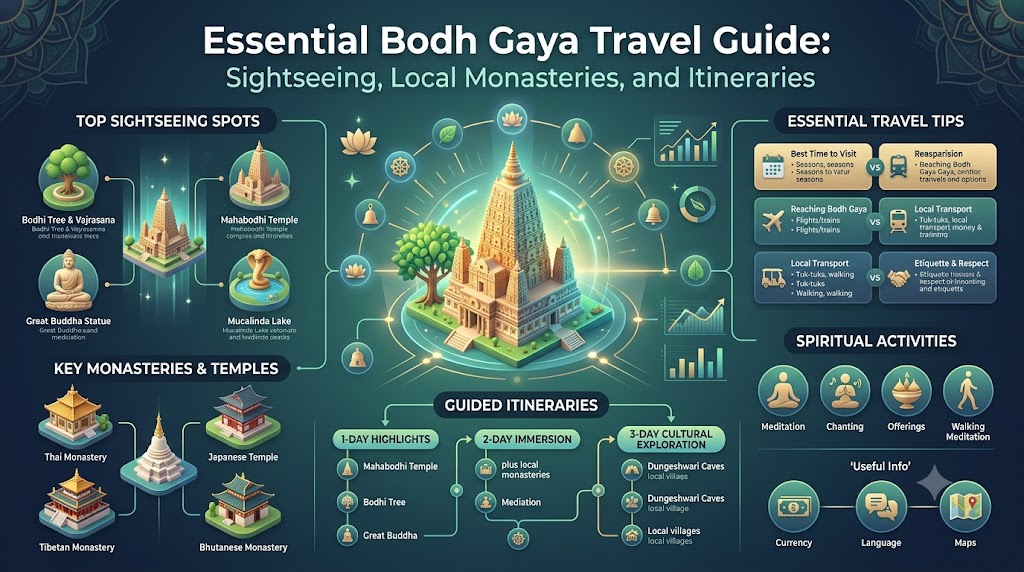
The central anchor of Bodh Gaya is the Mahabodhi Temple, a magnificent 55-meter-tall brick structure displaying classical Gupta-era architecture. Inside the sanctum rests a gilded stone statue of the Buddha in the Bhumisparsha Mudra (earth-touching posture). Surrounding the main tower are carved stone railings dating back to the Sunga and Gupta periods, along with votive stupas erected by pilgrims over two millennia.
- Key Highlight: The sacred Bodhi Tree located directly behind the temple, believed to be a direct descendant of the original tree under which Buddha meditated.
- Entry Fee: Free entry for individuals; small charges apply for carrying cameras or video recording devices into the complex.
- Opening Hours: 5:00 AM to 9:00 PM daily.
The Great Buddha Statue (80-Feet Statue)
Unveiled in 1989 by the 14th Dalai Lama, this colossal 80-foot stone statue depicts Lord Buddha seated in a deep meditative posture on a giant lotus. Carved out of red granite and sandstone by local sculptors in collaboration with Japanese craftsmen, it remains one of the most iconic landmarks in the region.
International Monasteries and Temples
Bodh Gaya is unique in its array of architectural styles, contributed by foreign Buddhist nations. Walking through the monastery zone allows visitors to experience traditional architecture from across Asia:
- Thai Temple: Featuring a striking sloped roof with gold-leaf accents, housing a prominent bronze Buddha statue.
- Japanese Temple (Indosan Nipponji): Built in classic Japanese wooden architecture, known for its tranquil gardens and interior mural paintings illustrating Buddha’s life.
- Tibetan Monasteries: Complex structures featuring colorful prayer flags, intricate thangka wall paintings, and large prayer wheels.
- Royal Bhutan Monastery: Showcasing Bhutanese clay carvings and detailed Buddhist mythology scenes painted on interior walls.
- Vietnamese, Taiwanese, and Sri Lankan Monasteries: Each offers peaceful spaces for reflection and distinct regional artwork.
Archaeological Museum Bodh Gaya
Maintained by the Archaeological Survey of India (ASI), this museum houses a rare collection of ancient Buddhist sculptures, terracotta items, stone inscriptions, and structural remains recovered during excavations around the temple precinct.
Practical Travel Information
Best Time to Visit
- October to March (Peak Season): Pleasant, cool weather ranging between 10°C and 25°C. Ideal for outdoor sightseeing, visiting monasteries, and walking through heritage precincts.
- April to June (Summer): Temperatures can exceed 40°C. Outdoor exploration during midday can be challenging; early mornings and late evenings are preferable.
- July to September (Monsoon): Heavy rainfall turns the surrounding landscape green, but high humidity may affect continuous travel plans.
Seasonal Festivals
- Buddha Jayanti (May): The most significant celebration marking Buddha’s birth, enlightenment, and passing. The temple complex is decorated, carrying vibrant processions.
- Kagyu Monlam / Nyingma Prayer Festivals (December–January): Thousands of monks gather for international chanting assemblies and Buddhist discourse sessions.
Comparison of Top Attractions in Bodh Gaya
| Attraction | Primary Significance | Recommended Duration | Key Travel Tip |
| Mahabodhi Temple | UNESCO World Heritage site, Bodhi Tree | 2 – 3 Hours | Electronics and phones must be deposited in designated lockers at the entrance. |
| Great Buddha Statue | 80-foot granite sculpture | 30 – 45 Minutes | Best visited in the late afternoon for optimal lighting and photography. |
| Thai Monastery | Traditional Thai Buddhist architecture | 45 Minutes | Maintain silence inside the main prayer hall. |
| Indosan Nipponji | Japanese design, peaceful meditation halls | 45 Minutes | Visit during morning meditation hours for a serene experience. |
| Bodh Gaya ASI Museum | Historical sculptures, ancient relics | 1 Hour | Closed on Fridays; plan your itinerary accordingly. |
Suggested Bodh Gaya Travel Itineraries
1-Day Trip Itinerary (Express Pilgrimage)
- Morning (7:00 AM – 10:30 AM): Begin early at the Mahabodhi Temple Complex. Spend time near the Bodhi Tree and walk around the ancient stupas while the atmosphere is peaceful.
- Late Morning (11:00 AM – 1:00 PM): Visit the Great Buddha Statue and explore the adjacent Thai Monastery.
- Lunch (1:00 PM – 2:30 PM): Enjoy traditional Bihari food or international meals at local cafes.
- Afternoon (2:30 PM – 4:30 PM): Tour the Indosan Nipponji (Japanese Temple) and the Royal Bhutan Monastery.
- Evening (5:30 PM – 7:30 PM): Return to the Mahabodhi Temple to observe the evening chanting and illumination of the main spire.
2-Day Trip Itinerary (Heritage & Nearby Exploration)
- Day 1: Follow the full 1-Day itinerary above to cover the core sites, international monasteries, and local museums.
- Day 2 (Excursion to Gaya & Dungeshwari):
- Morning: Travel to Dungeshwari Cave Temples (12 km from Bodh Gaya), where Prince Siddhartha practiced severe austerities before reaching enlightenment.
- Afternoon: Drive to nearby Gaya (15 km away) to visit the historic Vishnupad Temple along the Phalgu River and explore local handicraft markets.
- Evening: Enjoy a quiet evening strolling through the local monastic lanes of Bodh Gaya.
Famous Food and Dining in Bodh Gaya
Bodh Gaya’s dining scene is a unique mix of traditional Bihar food and international dishes tailored for long-stay global travelers.
- Traditional Bihari Cuisine: Don’t miss authentic Litti Chokha (roasted wheat balls filled with spiced gram flour, served with mashed aubergine and potato). You can also sample seasonal snacks like Sattu drinks, Dal Pitha, and local sweet delicacies such as Tilkut and Anarsa when visiting nearby Gaya.
- International Options: Due to the international Buddhist presence, many local cafes serve authentic Tibetan thukpa, momos, Japanese green tea, Korean meals, and continental breakfast options along Main Temple Road.
How to Reach Bodh Gaya
- By Air: The nearest airport is Gaya Airport (GAY), located roughly 12 km from Bodh Gaya. It connects directly to major domestic hubs like Delhi and Kolkata, alongside seasonal international flights from Thailand, Myanmar, and Vietnam. Alternatively, Patna Airport (PAT) is approximately 115 km away and offers frequent connections nationwide.
- By Train: Gaya Junction (GAY) is the primary railway hub, situated about 16 km from Bodh Gaya. It is well-connected via direct express trains to major cities including New Delhi, Kolkata, Varanasi, and Mumbai.
- By Road: Bodh Gaya is accessible via National Highway 83. Regular government and private buses, taxis, and auto-rickshaws operate continuously between Gaya town, Patna, Nalanda, Rajgir, and Bodh Gaya.
Decision-Making Framework for Visitors
When planning your journey to Bodh Gaya, structure your trip around your personal focus:
                  [Define Your Primary Purpose]
                                |
        +-----------------------+-----------------------+
        |                                               |
[Spiritual / Meditation]                       [Sightseeing & Heritage]
        |                                               |
* Plan 2-3 days minimum.                        * 1-2 days are sufficient.
* Book stay near Temple Road.                   * Combine with Rajgir/Nalanda.
* Visit Nov-Feb for retreats.                   * Peak season: Oct to March.
Common Travel Mistakes to Avoid
- Carrying Prohibited Electronics into the Temple: Mobile phones, large electronic gadgets, and smartwatches are not allowed inside the inner precinct of the Mahabodhi Temple. Deposit them safely at the free security locker center outside the main gate.
- Not Respecting Monastic Dress Codes: When visiting active monasteries and temples, wear modest clothing covering shoulders and knees. Remove shoes where indicated before stepping onto sacred platforms.
- Rushing the Itinerary: Combining Bodh Gaya, Rajgir, Nalanda, and Patna into a single day creates excessive transit fatigue. Allocate at least 2 full days for Bodh Gaya and its immediate surroundings.
- Relying Solely on Cashless Payments in Remote Areas: While major hotels and large restaurants accept cards and digital UPI payments, smaller local vendors and auto-rickshaws operate primarily on cash. Carry adequate currency notes.
Practical Tips / Key Takeaways
- Confirm Opening Schedules: Keep track of the opening hours for foreign monasteries; many close their gates for brief afternoon breaks between 12:00 PM and 2:00 PM.
- Dress Comfortably: Slip-on shoes are practical because you will be removing your footwear frequently when entering temple sanctums.
- Hydration: Carry reusable water bottles, especially during daytime walks between monastery zones.
- Local Transport: Negotiate auto-rickshaw fares in advance or opt for electric rickshaws (e-rickshaws) for affordable travel within town limits.
- Verified Guides: Hire licensed local guides near the main temple entry if you want verified historical commentary on Sunga railings and Pala-era inscriptions.
Frequently Asked Questions (FAQs)
1. What is the historical significance of Bodh Gaya?
Bodh Gaya is the place where Siddhartha Gautama attained enlightenment beneath the Bodhi Tree around 500 BCE, becoming the Lord Buddha. It is considered the most sacred site in Buddhism and houses ancient heritage monuments, including the UNESCO World Heritage Mahabodhi Temple Complex.
2. How do I reach Bodh Gaya from Gaya Junction Railway Station?
Gaya Junction is located approximately 16 kilometers from Bodh Gaya. Travelers can easily hire private taxis, auto-rickshaws, or shared e-rickshaws right outside the railway station. The road drive usually takes between 30 to 45 minutes depending on local traffic.
3. Are mobile phones allowed inside the Mahabodhi Temple?
No, mobile phones, smartwatches, and major electronic accessories are strictly prohibited inside the inner temple premises for security and spiritual decorum. Free, secure storage lockers are provided by the temple management committee near the primary security checkpoint.
4. What are the main places to visit in Bodh Gaya?
The main attractions include the Mahabodhi Temple Complex, the sacred Bodhi Tree, the 80-Foot Great Buddha Statue, the Archaeological Museum, and foreign Buddhist monasteries built by nations such as Thailand, Japan, Tibet, Bhutan, and Sri Lanka.
5. What is the best time of year to visit Bodh Gaya?
The best time to visit is between October and March when the weather remains cool and comfortable for sightseeing. Major international prayer assemblies and cultural events take place during these winter months, offering rich cultural experiences for travelers.
6. Is 1 day sufficient to explore Bodh Gaya?
A 1-day trip is enough to cover core highlights like the Mahabodhi Temple, the Great Buddha Statue, and 2 or 3 prominent international monasteries. However, a 2-day trip allows a more relaxed pace to explore museums and nearby sites like Dungeshwari Caves.
7. Can non-Buddhist tourists enter the monasteries in Bodh Gaya?
Yes, visitors of all religious backgrounds and cultural traditions are welcome to enter the monasteries and temple grounds. Tourists are expected to maintain silence, follow posted guidelines, dress modestly, and remove shoes where required.
8. What famous local food should I try in Bodh Gaya?
Visitors can enjoy authentic Bihari specialties like Litti Chokha, Dal Pitha, and local sweets such as Tilkut (especially in winter). Additionally, due to international tourism, numerous local cafes serve Tibetan momos, thukpa, Japanese dishes, and Western breakfasts.
9. Are camera permits required at the Mahabodhi Temple?
While mobile phones are prohibited, digital cameras and video recording cameras are permitted inside the outer compound upon purchasing an official camera ticket at the main entry gate.
10. Where can I find more Bihar travel guides and local tourism information?
For detailed travel guides, itineraries, cultural heritage updates, and local tourism information covering Bodh Gaya and other regional destinations, you can browse dedicated resources available on Mera Apna Bihar.
Conclusion
Bodh Gaya remains an incomparable destination that bridges ancient history with modern spiritual traditions. From the ancient architecture of the Mahabodhi Temple to the quiet, serene courtyards of international monasteries, every corner of this historic town offers insight into global cultural heritage. Planning your visit with clear knowledge of travel seasons, transportation options, entry guidelines, and local dining options ensures a smooth and enriching journey. Whether you are traveling for pilgrimage, architectural exploration, or cultural curiosity, exploring this heritage site offers a memorable look into India’s historical legacy. For further destination guides, transport insights, and cultural stories across the state, rely on Mera Apna Bihar to help plan your travel experience.
Leave a Reply