Drone Weather Monitoring for Safer Flights, Better Planning, and Professional UAV Work

October 1, 2026 · 15 reads
Introduction
Weather can change a drone mission very quickly. Wind, rain, heat, and poor visibility can affect flight plans. Good weather checks help pilots make safer choices. They also help businesses plan field work with fewer delays. This is why weather should matter during every drone mission. Drone reviews can show weather limits for different models. A drone comparison can also show useful flight differences. People looking for the best drones should check weather support too. Drone specifications often list important weather limits. Professional drone services also need careful weather planning. DronesBee helps users explore drone information and service options. It connects drone research with practical UAV needs. This article explains weather monitoring in simple terms. It also covers planning, services, mistakes, and useful tools.
What Does Drone Weather Monitoring Mean?
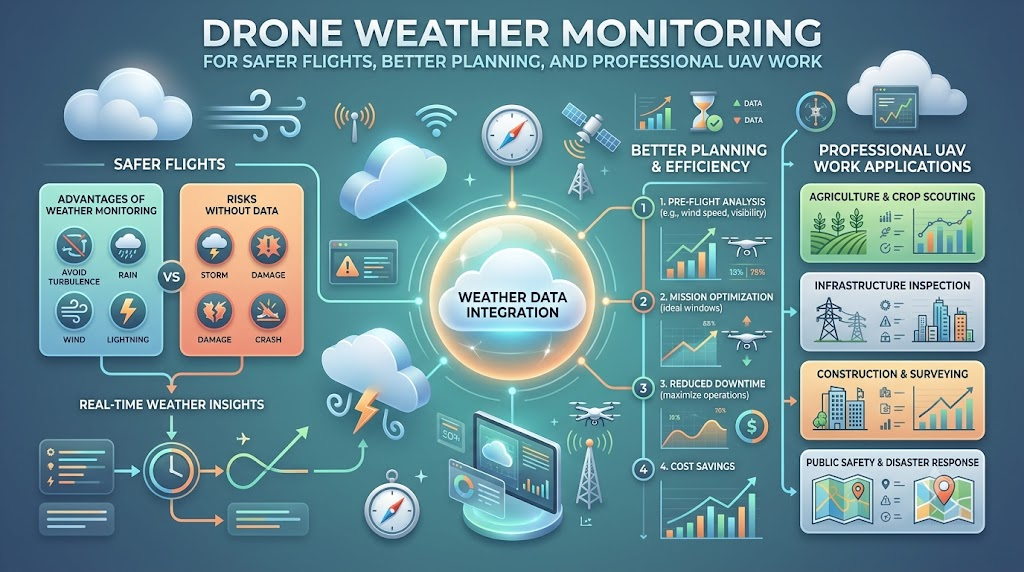
Drone weather monitoring means checking weather before and during flight. It helps pilots understand conditions around the flight area. Weather information may include wind, rain, temperature, and visibility. Some missions also need cloud and sunlight information. These details can affect drone control and image quality. Weather can also affect batteries and sensors. Strong wind may make a drone harder to control. Rain can create problems for equipment that lacks water protection. Heat can also affect battery performance and flight planning. Good drone reviews often discuss weather limits. Users should read those details before buying equipment. Drone specifications can show operating limits and equipment protection details. A drone comparison should include weather needs when possible. This approach helps users choose equipment based on real work.
Why Weather Matters for Buyers and Businesses
Weather affects both small flights and large projects. A hobby pilot may need clear conditions for simple filming. A business may need stable weather for planned field work. Poor weather can delay flights and reduce useful results. It can also increase safety concerns around people and property. Businesses should include weather checks in their mission plans. This matters even more for repeated commercial work. Professional drone services may involve large sites and longer operations. These missions need more detailed weather planning. Users searching for drone pilots near me should ask about weather planning. A skilled pilot should understand how conditions affect the planned task. Aerial photography services also depend on light and visibility. Survey work needs stable conditions for useful data. Weather planning therefore supports both safety and project quality.
Understanding Drone Specifications
Drone specifications give useful information about equipment limits. Weather-related details may include wind resistance and operating temperature. These details should never be treated as permission for unsafe flight. A specification only describes the equipment’s stated operating range. Local rules and actual conditions still matter. A drone may handle wind but struggle with sudden gusts. A camera may also produce poor images during heavy cloud cover. Users should read specifications before choosing a model. This makes drone comparison more useful and practical. Good drone reviews can add real-world context to technical details. Still, users should separate tested information from personal opinions. The best drones for one task may not fit another task. Weather needs should always match the actual mission. Professional teams should also record weather conditions during important flights.
Drone Comparison: How to Choose for Weather Conditions
A useful drone comparison should look beyond camera quality. Weather handling can be just as important for field work. Users should compare wind limits and operating temperature ranges. They should also review protection details for the drone body. Battery performance can also change with temperature. Flight time may vary under different weather conditions. A drone used indoors has different needs from one used outdoors. A mapping team may need stable flights across large open areas. An inspection team may work around buildings and changing wind patterns. This is where drone specifications become important. Drone reviews can help users understand how equipment performs in practice. However, reviews should not replace official equipment information. Users should match the aircraft with the mission. The best drones are the ones that fit the actual work.
What Makes the Best Drones for Different Needs
The best drones depend on the mission, environment, and operator needs. Photography work may focus on camera quality and stable flight. Mapping work may need accurate positioning and repeatable routes. Inspection work may need useful sensors and steady control. Agricultural work may need equipment that supports field operations. Weather also changes the needs of each task. A lightweight drone may react differently to strong wind. A larger platform may have different handling needs. Buyers should not select equipment from one feature alone. They should study drone specifications as a complete set. A careful drone comparison can reveal useful differences. Drone reviews may also explain practical handling experiences. These details help users make informed equipment choices. Weather planning should remain part of the buying process.
Reading Drone Reviews the Right Way
Drone reviews can help buyers understand real-world drone use. They may discuss flight control, camera results, battery use, and software. Some reviews may also discuss weather performance. Users should check whether a review matches their planned mission. A drone used for casual filming has different needs from survey work. Users should also check when and where testing happened. Weather conditions can change the results of a flight test. One person’s experience may not represent every environment. This is why drone comparison should use several useful factors. Official drone specifications should support technical decisions. Reviews can then provide extra practical context. People searching for the best drones should avoid choosing from one review. A wider research process usually gives better information. This helps users understand equipment before spending money.
Finding Professional Drone Services
Professional drone services cover many types of business work. These services may include photography, mapping, inspection, and farm support. Weather planning forms an important part of many outdoor missions. Service providers should review local conditions before flight. They may also adjust timing when conditions change. Users should explain the project goal before selecting a provider. This helps the operator understand the equipment and planning needs. Drone pilots near me may offer different services and experience levels. Users should check whether the pilot handles the required type of work. They should also ask how weather affects the planned schedule. Aerial photography services may need specific lighting conditions. Drone surveying services may need stable conditions for accurate results. Drone inspection services may also depend on safe access and visibility.
Searching for Drone Pilots Near Me
Searching for drone pilots near me can help users find local operators. Local pilots may understand common weather patterns in their area. They may also know the practical conditions around the work site. Still, location alone should not decide the choice. Users should check the pilot’s relevant experience and service type. The project should also match the pilot’s equipment and workflow. Weather planning should form part of the early discussion. Ask how the pilot handles wind, rain, heat, and changing visibility. A good plan should include what happens if conditions become unsafe. Drone services can then be scheduled with fewer surprises. DronesBee.com can help users explore drone-related information and service discovery. This makes it easier to connect equipment needs with field work.
Aerial Photography Services for Events and Real Estate
Aerial photography services often depend heavily on weather. Good light can improve photos and videos. Strong wind can make smooth camera movement harder. Rain can also stop outdoor photography completely. Real estate projects may need clean views of buildings and land. Events may need careful timing around people and changing weather. Pilots should check conditions before arriving at the location. They should also keep a backup plan for poor weather. Users can compare drone reviews when choosing equipment for photography work. They can also study drone specifications for camera and flight needs. A drone comparison can help separate useful features from extra features. The best drones for photography depend on the project’s actual needs.
Drone Surveying and Inspection Services
Drone surveying services need careful planning before flight. Wind can affect flight paths across open areas. Rain can also affect visibility and equipment safety. Survey teams should check weather before collecting important data. They may also repeat checks during long missions. Drone inspection services have similar weather concerns. Buildings, towers, roofs, and other structures can create wind changes. Weather conditions may become different near tall structures. Pilots should understand these local effects before flight. Drone specifications can help teams understand equipment limits. A drone comparison can help identify equipment suited to the task. Drone reviews may provide additional practical information. These steps can help teams plan safer and more useful inspection work.
Agricultural Drone Services for Modern Farming
Agricultural drone services can support many farm activities. These may include field observation and crop monitoring. Weather can strongly affect agricultural drone work. Wind may change flight stability across open fields. Rain can affect both flight safety and field conditions. Heat may also affect batteries during long missions. Farmers should discuss weather limits with service providers. They should also plan missions around suitable field conditions. Drone services can support farms when the equipment fits the task. A drone comparison can help teams understand different aircraft options. Drone specifications can show useful operating details. The best drones for farm work depend on the mission. Drone reviews can also help users understand practical field performance.
Table: Drone Services at a Glance
| Drone Service | Weather Need | Main Planning Focus | Useful Information |
|---|---|---|---|
| Aerial Photography Services | Stable wind and good light | Timing and visibility | Camera needs and drone reviews |
| Drone Surveying Services | Stable flight conditions | Route and data quality | Drone specifications |
| Drone Inspection Services | Safe wind and visibility | Site access and control | Drone comparison |
| Agricultural Drone Services | Suitable field conditions | Wind and field timing | Drone services |
| Local Pilot Services | Safe operating conditions | Location and mission plan | Drone pilots near me |
Common Drone Weather Planning Mistakes
1. Checking Weather Only Once
Weather can change during a mission. Pilots should review conditions before and during important flights.
2. Ignoring Wind Gusts
Average wind speed may not show sudden gusts. Pilots should consider changing wind conditions before takeoff.
3. Flying Too Close to Rain
Rain can create equipment and control problems. Pilots should avoid unsafe weather conditions.
4. Forgetting Temperature
Temperature can affect batteries and equipment. Pilots should check operating limits before flight.
5. Trusting One Weather Source
One forecast may not show every local change. Pilots should review reliable weather information carefully.
6. Ignoring Visibility
Poor visibility can make flight control harder. Pilots should consider visibility before planning outdoor work.
7. Choosing Equipment Without Weather Research
Weather needs vary between missions. Users should check drone specifications before buying equipment.
8. Using Reviews Without Context
A review may describe one person’s experience. Users should compare reviews with their own mission needs.
9. Forgetting a Backup Plan
Weather may stop a planned flight. Teams should prepare another time or safer work option.
10. Treating Weather Limits as Guarantees
Equipment limits do not remove pilot responsibility. Pilots should always consider actual conditions and local rules.
A Simple Example
Fictional Example: A Property Photography Project
Imagine a property company needs aerial images of a large site. The team wants to schedule aerial photography services on a weekend. The pilot checks wind, rain, visibility, and light before the flight. The forecast shows strong wind during the planned time. The pilot suggests a safer time with better conditions. The company also checks drone reviews and drone specifications before future projects. They use a drone comparison to understand different equipment options. They also explore drone services through DronesBee.com. This fictional example shows why weather planning should happen early. Good planning can reduce delays and improve mission preparation.
How DronesBee Can Help
DronesBee is a comprehensive drone and UAV ecosystem platform. It helps users explore drone information for different needs. The platform covers drone data from brands such as DJI, Autel Robotics, Skydio, Parrot, and AeroVironment. Users can explore drone reviews and compare useful equipment details. A drone comparison can help users study different options. The platform also supports research around drone specifications and practical UAV features. Users can explore drone services for different professional needs. People searching for drone pilots near me can also explore operator discovery options. This can support users looking for aerial photography services or drone surveying services. It can also help people researching drone inspection services and agricultural drone services. DronesBee.com also connects users with drone news and community resources. These resources can support better research before a drone project.
FAQs
1. Why are drone reviews important for weather planning?
Drone reviews can show how users experience equipment in different conditions. They may discuss wind handling, flight control, and battery behavior. However, users should also check official drone specifications before making decisions.
2. How can a drone comparison help with weather needs?
A drone comparison can help users study wind limits, temperature ranges, battery needs, and protection features. These details can support better equipment selection. Users should match those features with the actual mission and expected operating environment.
3. What should I check before choosing the best drones?
The best drones depend on your project needs. Check camera features, flight time, sensors, control systems, and weather-related drone specifications. Also consider your location, mission type, operator skill, and expected flying conditions before choosing equipment.
4. What are drone specifications related to weather?
Drone specifications may include operating temperature, wind resistance, and equipment protection details. These details help users understand equipment limits. They do not guarantee safe operation in every condition. Pilots must also consider actual weather and local requirements.
5. How do I find drone pilots near me?
You can search for drone pilots near me through local drone directories and service platforms. Check the pilot’s relevant experience, equipment, service type, and weather planning process. Choose a provider based on the needs of your actual project.
6. What are aerial photography services affected by weather?
Aerial photography services can depend on wind, rain, sunlight, and visibility. Strong wind can affect camera stability. Rain can stop outdoor work. Good weather planning helps photographers select safer and more useful flight times.
7. When are drone surveying services affected by weather?
Drone surveying services can be affected by wind, rain, visibility, and changing field conditions. Poor conditions may affect flight paths or collected data. Survey teams should review weather before important missions and adjust plans when conditions change.
8. Why do drone inspection services need weather checks?
Drone inspection services often involve buildings, roofs, towers, and other structures. Wind can change around these objects. Rain and poor visibility can also create problems. Weather checks help teams decide whether the planned inspection can proceed safely.
9. How do agricultural drone services use weather information?
Agricultural drone services use weather information to plan suitable flight times. Wind can affect stability across open fields. Rain can change field conditions. Temperature can also affect batteries. Weather checks should happen before important farm missions.
10. Can drone services operate in every type of weather?
No. Drone services must consider equipment limits, actual conditions, local rules, and mission risks. Rain, strong wind, extreme temperatures, and poor visibility may affect a flight. Operators should assess conditions before every outdoor mission.
Final Thoughts
Weather planning is a key part of safe drone work. Wind, rain, heat, and visibility can affect many missions. Buyers should check drone specifications before choosing equipment. They should also read drone reviews and use a useful drone comparison. People should choose the best drones based on real project needs. Businesses can also explore professional drone services for specialized work. These may include aerial photography services, drone surveying services, drone inspection services, and agricultural drone services. People searching for drone pilots near me should also discuss weather planning. DronesBee.com can support drone research and service discovery. Good planning helps pilots make better decisions before every flight.
Leave a Reply