How AI News Aggregators Help Readers Make Sense of a Busy News Cycle

October 28, 2026 · 10 reads
Introduction
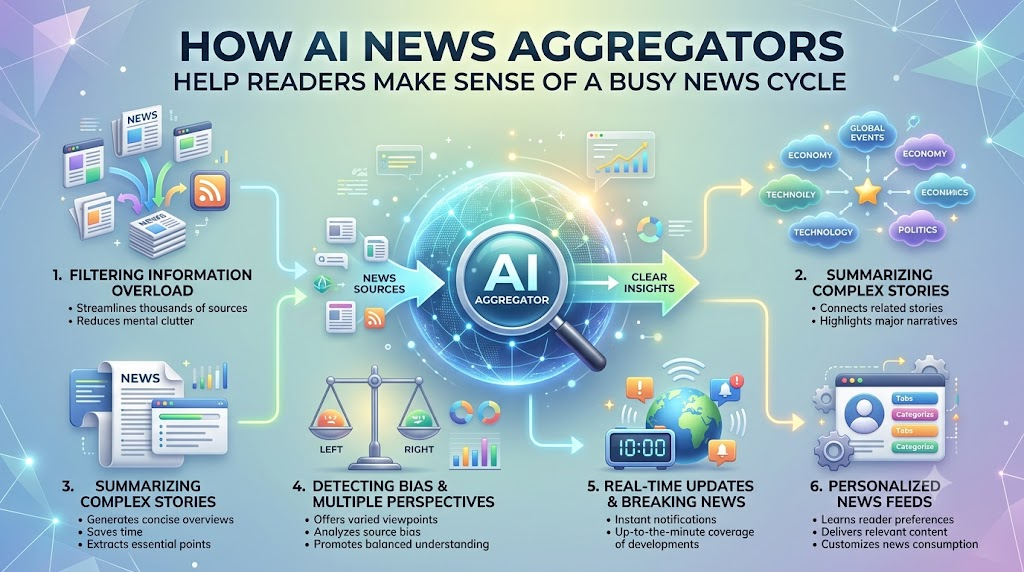
Every day, new stories appear across the internet. Readers see updates about technology, business, finance, health, and world affairs. Many stories cover the same event. Others offer different facts or opinions. Finding useful information can take more time than expected.
An AI News Aggregator can make this process easier. It brings headlines from many publishers into one place. Readers can explore several topics without opening dozens of websites. HeadlineSift helps readers discover important global developments and follow news from different sources. Its purpose is to reduce information overload while keeping readers connected to original reporting.
However, quick access does not always mean complete understanding. Readers still need to check facts, compare reports, and notice missing details. Good news habits combine useful technology with careful thinking.
What Does AI-Powered News Discovery Mean?
AI-powered news discovery uses artificial intelligence to organize and explain news content. Artificial intelligence, or AI, means computer systems that perform tasks linked to human thinking. These tasks can include sorting information, finding patterns, and producing short summaries.
A news platform may collect headlines from many publishers. It can group stories about similar subjects and help readers find related reports. Some systems also create short explanations of longer articles.
This process saves time, but it has limits. Software may misunderstand a headline or miss an important detail. Readers should treat automated results as a starting point, not a complete account of events.
Why News Overload Makes Reading Difficult
News overload happens when people receive more information than they can process comfortably. Notifications, social posts, headlines, and breaking updates compete for attention.
As a result, readers may skim stories without understanding them. They might also remember a dramatic headline but forget the facts behind it. Repeated coverage can make one event appear more important than it really is.
An AI News Aggregator can bring related stories together. This makes it easier to compare coverage and notice useful differences. Still, readers should choose topics carefully and take breaks when the news feels overwhelming.
How an AI News Aggregator Collects Headlines
An AI News Aggregator gathers news items from different publishers. It may use feeds, approved data sources, or other available collection methods. The system then organizes information so readers can explore it more easily.
For example, several reports may discuss the same company announcement. A platform can group those headlines under one subject. Readers can then open individual reports to understand each publisher’s details.
HeadlineSift.com is designed to help readers find global developments in one searchable place. It brings together headlines from hundreds of news sources across countries and categories. The range of coverage can help readers explore subjects beyond their usual interests.
However, no aggregator can guarantee that every important story will appear. Available sources, collection methods, and system limits can affect what readers see.
How an AI News Summarizer Supports Better Reading
An AI News Summarizer turns longer content into a shorter explanation. It can help readers understand the main subject before opening a full report.
Short summaries are useful when several articles discuss similar developments. Readers can quickly identify which reports deserve more attention. This is especially helpful during a busy news cycle.
Yet a summary may leave out background, uncertainty, or opposing views. It may also misunderstand a number or relationship between events. Readers should open the original article before relying on an important claim.
HeadlineSift.com can help readers discover news and review AI-generated explanations. These explanations should support reading rather than replace it. The original report remains important when details affect public understanding or personal decisions.
Why Curated News Headlines Are Useful
Curated News Headlines are selected and organized to make browsing easier. Curation means choosing and arranging information using defined signals or rules.
A system may consider freshness, relevance, source information, and the significance of a story. Freshness shows how recently information appeared. Relevance indicates how closely a story matches a subject. Source signals can help readers judge where a report came from.
These signals do not prove that a story is correct. A new article may contain errors, while an older report may offer valuable background. Readers should consider the date and evidence together.
HeadlineSift.com uses AI-supported news discovery to help organize stories. Curated News Headlines can reduce repeated browsing and make related coverage easier to explore. Readers should still decide which reports deserve their trust.
Following Updates With a Breaking News Aggregator
A Breaking News Aggregator helps readers follow developing events. It brings together available updates so readers can see how coverage changes over time.
Early reports often contain limited information. Witness accounts may conflict, official details may be missing, and initial explanations may later change. A headline published first is not always the most complete report.
Readers should check publication times and look for later corrections. They should also separate confirmed facts from claims that remain uncertain.
A Breaking News Aggregator can make new information easier to find. However, speed should not replace careful checking. Readers can use HeadlineSift.com to discover developing stories and then review the original reporting for details.
Getting Wider Context From a Global News Aggregator
A Global News Aggregator helps readers explore international, national, and regional coverage. This wider view can show how the same issue affects different communities.
For example, a change in international trade may affect businesses in several countries. Local reports may explain effects on workers, customers, or nearby industries. International coverage can provide additional context.
However, global coverage may vary by language, publisher, and region. Some communities receive less attention than others. Readers should look for local reporting when an event directly affects a particular area.
HeadlineSift.com brings together headlines from different countries and categories. Its search-based approach can help readers explore subjects outside their usual news routine. A wider range of reports can improve understanding, provided readers examine each source carefully.
Exploring Reports With a Technology News Aggregator
A Technology News Aggregator organizes reports about digital products and technical developments. Topics may include artificial intelligence, cybersecurity, software, gadgets, and cloud computing.
These subjects often involve complex terms. A short explanation can help readers understand the basic idea before exploring technical details. Comparing reports may also reveal differences between a product announcement and an independently tested result.
Readers should be careful with claims about new tools. A company announcement may describe expected benefits rather than proven results. Independent evidence can help establish what a technology actually does.
A Technology News Aggregator can make technical coverage easier to browse. Readers can follow changes in their field without visiting every publisher separately. They should still check original reports before making work or purchasing decisions.
Tracking Industry Changes With a Business News Aggregator
A Business News Aggregator collects reports about companies, industries, markets, and economic developments. It helps readers follow business events from several publishers.
Company announcements can explain planned changes, new products, or management decisions. Industry reports may describe competition, customer demand, or supply problems. Economic coverage can show how wider conditions affect businesses.
Readers should distinguish announcements from verified outcomes. A planned expansion does not prove that a company will succeed. A forecast also describes a possible future, not a guaranteed result.
A Business News Aggregator helps organize these subjects in one place. Readers can compare coverage and identify questions worth investigating. HeadlineSift.com supports news discovery across business and other categories, while original reporting provides the details needed for closer review.
Reading Financial News Headlines With Care
Financial News Headlines cover subjects such as markets, interest rates, company results, and economic policy. These reports can help readers understand changes in the financial world.
However, a market headline rarely explains every reason behind a price movement. Prices may respond to several factors at once. A single report may also focus on a short period instead of a wider trend.
Readers should check the date, figures, and source of each claim. They should also distinguish factual reporting from forecasts and personal opinions.
A Financial News Headlines section can help readers discover relevant reports. It should not encourage rushed decisions based on one update. News content provides general awareness, not personal financial advice. Speak with a qualified financial professional before making decisions about your own finances.
Understanding News Impact Analysis
News Impact Analysis explains why a development matters and who may be affected. It connects a reported event with possible effects on people, businesses, or communities.
For example, a proposed transport change may affect travel times and local trade. Readers may need to know when the change begins, which areas it covers, and whether officials have confirmed the details.
AI-generated insights can help organize these questions. However, they may confuse a possible effect with a confirmed outcome. Readers should look for evidence in the original reports before accepting an explanation.
HeadlineSift.com can support discovery through AI-assisted context and impact explanations. News Impact Analysis is most useful when it separates known facts from possible consequences. Readers should remain open to new information as a story develops.
The Future of a Personalized News Digest
A Personalized News Digest is a collection of stories tailored to a reader’s interests. It might organize updates about selected subjects in one convenient place.
For example, a reader may want news about software, local business, and international trade. A personalized service could help organize those interests without requiring a fresh search every time.
Personalization also has risks. Readers may see fewer viewpoints if recommendations become too narrow. A useful system should help people explore new subjects rather than show only familiar opinions.
A Personalized News Digest is a planned future capability for HeadlineSift.com. It should not be treated as a feature currently available on the platform. Readers can benefit from the general idea while continuing to explore different subjects and sources.
How to Check a News Story Yourself
Technology can support news reading, but simple checking habits remain essential.
First, identify the publisher and author when available. Look at the publication date and check whether the report has been updated.
Next, open the original report instead of relying only on a summary. Read the relevant details and note whether the article separates evidence from opinion.
Then compare the claim with reporting from another independent source. Two articles repeating the same original claim do not always provide independent confirmation.
Finally, watch for emotional language and dramatic promises. Headlines that demand an immediate reaction deserve extra care. If a claim could affect someone’s safety, money, or reputation, verify it before sharing.
These steps help readers use an AI News Aggregator without handing over their judgment. They also help readers recognize when a story remains uncertain.
Table: News Tools at a Glance
| Tool Type | What It Does | Who It Helps |
|---|---|---|
| AI News Aggregator | Collects headlines from multiple sources | Readers following many subjects |
| AI News Summarizer | Provides a short explanation of a report | Busy readers needing an overview |
| Breaking News Aggregator | Organizes updates about developing events | Readers tracking changing stories |
| Global News Aggregator | Brings together coverage from different regions | Readers seeking international context |
| Technology News Aggregator | Organizes digital and technical reporting | Technology fans and professionals |
| Business News Aggregator | Collects company and industry coverage | Business owners and professionals |
| Financial News Headlines | Highlights reports about markets and the economy | Readers following financial developments |
| News Impact Analysis | Explains possible effects and wider context | Readers examining why events matter |
| Personalized News Digest | Describes news organized around personal interests | Readers interested in tailored news |
Common Mistakes News Readers Make
- Reading only the headline: The full report may contain important limits or exceptions.
- Trusting one publisher completely: Different sources may offer missing facts or useful context.
- Sharing stories too quickly: Unchecked claims can spread before corrections appear.
- Treating early reports as final: Developing events can change as evidence becomes available.
- Mistaking summaries for complete reports: Short explanations may leave out important details.
- Ignoring publication dates: Old information can appear current when dates go unnoticed.
- Confusing opinions with facts: A strong viewpoint does not prove a factual claim.
- Following only familiar topics: Narrow reading can hide useful information from other fields.
- Believing dramatic wording automatically: Emotional language can distract readers from the available evidence.
- Ignoring the original source: Readers may miss corrections, context, and supporting details.
A Simple Example
Consider a fictional small business owner who wants to understand changes in online shopping. The owner has limited time and finds many reports about delivery costs, customer habits, and digital payments.
The owner opens HeadlineSift.com to discover related headlines in one place. An AI News Summarizer helps identify which reports discuss delivery costs and which focus on payment systems.
The owner then opens the original reports and compares the evidence. One article discusses a survey, while another describes a company’s planned service change. The owner recognizes that these reports answer different questions.
Instead of treating every headline as equally important, the owner saves time by choosing relevant reports. The owner also avoids making business decisions from summaries alone.
This fictional example shows how news discovery can support better reading. The tool organizes information, but the reader still checks the facts.
How HeadlineSift Can Help
HeadlineSift helps readers discover news across many subjects and countries. Its headline collection brings reports from hundreds of news sources into one searchable place.
AI-supported summaries can provide short explanations of selected stories. Curation can help organize headlines using relevance, freshness, source credibility signals, and story significance. These signals can guide discovery, but they cannot guarantee accuracy.
Readers can explore breaking developments, global affairs, technology updates, business reports, and financial coverage. News Impact Analysis can offer additional context about why a story matters and who may be affected.
Source attribution and direct links to original reporting help readers check details themselves. Readers should open those reports before relying on important claims.
The planned Personalized News Digest may offer another way to organize news in the future. Until then, readers should explore available coverage, compare sources, and use their own judgment.
Frequently Asked Questions About AI News Aggregators
1. What is an AI News Aggregator?
An AI News Aggregator collects and organizes headlines from multiple publishers. It helps readers discover reports without visiting every website separately. Some systems also group related stories or highlight useful subjects. Readers should still open original reports to check facts, context, and important details before accepting a claim.
2. Can an AI News Summarizer replace reading the full article?
No. An AI News Summarizer provides a shorter explanation of a report. It can save time during an initial review, but it may miss context or misunderstand details. Read the original article when accuracy matters. This is especially important for reports involving safety, public policy, money, or serious allegations.
3. How do Curated News Headlines help readers?
Curated News Headlines organize stories using signals such as relevance, freshness, and source information. This can make browsing easier and reduce repeated searches. However, curation does not prove that every selected story is accurate or important. Readers should compare coverage and consider whether the available evidence supports each claim.
4. What should readers know about a Breaking News Aggregator?
A Breaking News Aggregator helps readers follow developing events as reports appear. Early details may be incomplete or incorrect. Readers should check timestamps, later updates, and official information where relevant. Waiting for confirmation is often wiser than sharing an unverified claim simply because it appeared first.
5. Why use a Global News Aggregator?
A Global News Aggregator helps readers explore international, national, and regional coverage. It can reveal how an issue affects different places and communities. However, coverage may vary across regions and publishers. Readers should seek local reporting when needed and compare sources before drawing conclusions about a complex event.
6. Who benefits from a Technology News Aggregator?
A Technology News Aggregator can help students, professionals, business owners, and technology enthusiasts follow digital developments. It may organize news about software, artificial intelligence, cybersecurity, gadgets, and cloud computing. Readers should distinguish marketing claims from tested results and check original technical reports before choosing tools or changing work practices.
7. What does a Business News Aggregator cover?
A Business News Aggregator brings together company announcements, industry developments, and economic reports. It can help readers spot subjects worth further research. However, an announcement does not guarantee a successful outcome, and a forecast may prove wrong. Readers should check supporting evidence before making important business decisions.
8. How should readers interpret Financial News Headlines?
Financial News Headlines can help readers follow market activity, economic policy, and company results. A headline alone rarely explains every cause or risk. Check the date, figures, and original report before drawing conclusions. General news is not personal financial advice. Speak with a qualified professional about your individual financial decisions.
9. What is News Impact Analysis?
News Impact Analysis explores why an event matters and who might experience its effects. It can connect reported facts with possible outcomes for people, businesses, or communities. AI-generated explanations may contain errors or unsupported assumptions. Readers should check original reporting and distinguish confirmed effects from predictions that remain uncertain.
10. Is Personalized News Digest available on HeadlineSift.com?
Personalized News Digest is a planned future capability for HeadlineSift.com, not a feature that should be described as currently available. The general idea is to organize news around reader interests. Personalization can save time, but readers should continue exploring different subjects and viewpoints to avoid a narrow news experience.
Final Thoughts
News reading becomes easier when useful information is organized clearly. An AI News Aggregator can help readers discover stories across subjects and countries. Short summaries can offer an overview, while curated headlines can make browsing more focused.
Still, technology cannot remove every error or guarantee complete coverage. Readers should check dates, compare independent reports, and open original sources before accepting important claims. Financial stories deserve extra care because headlines can leave out risks and uncertainty.
HeadlineSift helps readers discover news from many publishers in one place. Its tools can support a more focused reading routine, but careful judgment remains essential. The best news habits combine efficient discovery with thoughtful verification.
Leave a Reply