Employee Attendance and Leave Management Software: A Practical Guide for Small Businesses

October 29, 2026 · 5 reads
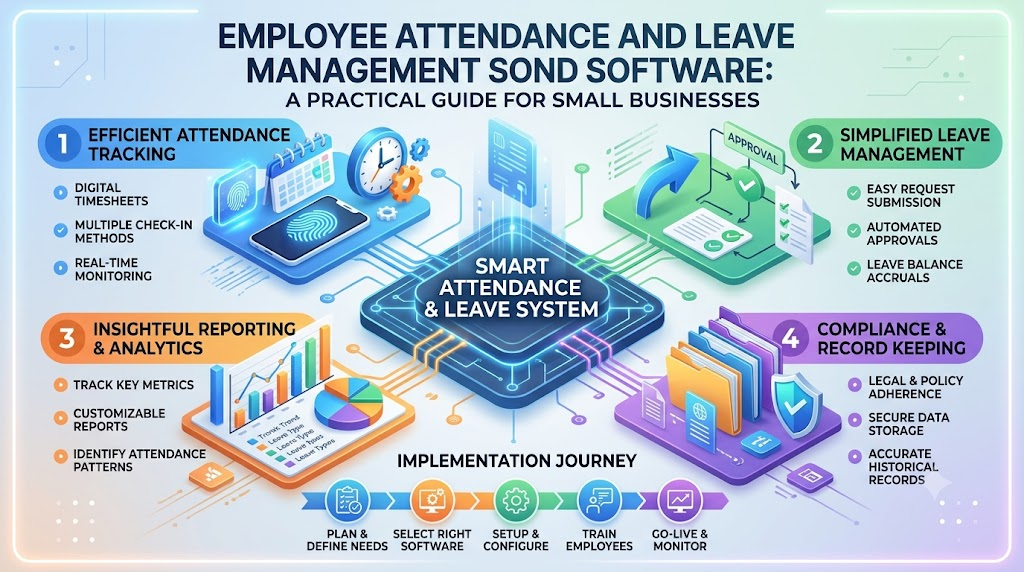
Introduction
Managing employee attendance and leave can become difficult as a business grows. Staff may record working hours in spreadsheets. Managers may approve leave through emails or messages. These separate records can cause confusion. HR teams may also struggle to find the latest information.
Employee Attendance Management Software helps businesses keep daily work records in one place. It can track check-ins, working hours, and attendance changes. Employee Leave Management Software also helps staff request time off. Managers can review requests without searching through old messages.
InOrOff offers a cloud-based attendance and leave management platform for small and growing businesses. It brings key workforce records into one system. This can reduce manual spreadsheet work and make everyday tasks easier to manage.
What Does Attendance and Leave Management Mean?
Attendance management means recording when employees start and finish work. It can also include breaks, late arrivals, and approved attendance changes. These records help managers understand working patterns.
Leave management covers planned and unplanned employee absences. It includes leave requests, available days, approvals, and holiday calendars. Clear records help staff and managers understand the current position.
An Attendance and Leave Management System brings both tasks together. HR teams can review attendance and leave without switching between separate files. This makes it easier to check information before making routine decisions.
Why Small Businesses Need Clear Workforce Records
Small businesses often begin with simple spreadsheets. This approach may work when only a few people need records. Problems can appear when teams expand or managers change.
One employee may update a spreadsheet while another uses an older copy. A manager may approve leave through a message. HR may not receive that update in time. These gaps can lead to incorrect balances or confusing attendance reports.
Digital records provide a shared place for routine information. Staff can submit requests through a defined process. Managers can review attendance details and leave requests more clearly.
However, software cannot decide every workplace question. Businesses still need clear internal policies. They should also check their local labour rules and company policy.
Employee Attendance Management Software
Employee Attendance Management Software records daily attendance in a more organised way. Depending on the platform, it may track check-in times, check-out times, breaks, and late arrivals.
Manual attendance sheets can be difficult to maintain. Someone must enter records, check missing details, and correct mistakes. A digital system can bring these tasks into one workspace.
Managers should look for clear attendance summaries and simple correction options. They should also understand how the system records timestamps. A timestamp is the recorded time of an event.
InOrOff.com helps teams manage attendance through a central platform. Managers can review attendance records and handle corrections. This gives them a clearer view of daily attendance activity.
Employee Check In Check Out Software
Employee Check In Check Out Software records when staff begin and end their workday. Some platforms let employees use a web browser instead of a dedicated attendance device.
Browser-based access can suit teams that work from different desks or office areas. Employees follow the available check-in process. The system records the event for later review.
Server-verified timestamps use the server’s recorded time for an event. This helps create consistent records instead of relying only on an employee’s device clock. It does not prevent every possible mistake or misuse.
Businesses should explain their check-in process to staff. Employees need to know when to check in and out. They should also know how to report missed entries.
InOrOff.com supports browser-based check-ins and check-outs with server-verified timestamps. This can help small teams keep attendance records in a central place.
Employee Leave Management Software
Employee Leave Management Software helps organise employee time-off requests. It can bring leave types, holiday calendars, absence records, and company policies together.
Without a shared system, employees may send requests through different channels. Managers might miss a message or forget to update a spreadsheet. Other team members may not know about an approved absence.
A digital process gives each request a clear place. Staff can submit leave for review. Managers can check the request against the company’s policy and team schedule.
InOrOff.com helps businesses manage leave information alongside attendance records. Teams can keep requests, approved absences, and relevant calendar details together. The platform does not decide which leave rules a business must follow.
Companies should set clear rules for leave requests. Staff should understand how to apply and where to check the decision.
Attendance and Leave Management System
An Attendance and Leave Management System connects two related parts of workforce administration. Attendance records show when employees work. Leave records show when they are expected to be away.
Keeping these records together can reduce repeated data entry. Managers can review upcoming absences while checking team attendance. HR can find relevant details in one workspace.
For example, an approved leave request can help explain why an employee has no attendance entry that day. Without connected records, HR may need to investigate the absence manually.
A shared system can also support better planning. Managers can see upcoming leave before assigning work. They can then discuss coverage with the team.
InOrOff.com combines attendance and leave management features for small and growing businesses. Its central approach can help reduce scattered records and simplify routine administration.
Leave Approval Workflow Software
Leave Approval Workflow Software helps organise the steps between a leave request and a decision. A workflow is the sequence of actions used to complete a task.
An employee submits a request. The manager reviews the dates and relevant policy. The manager then approves or rejects the request. The final status remains available for reference.
A clear approval process reduces uncertainty. Employees can check the status of their requests. Managers can also review pending requests before planning work.
Attendance corrections need a clear process too. An employee may forget to check out or record the wrong time. Managers should review the details before changing the record.
InOrOff.com provides a central approval dashboard for leave decisions and attendance corrections. This helps teams keep important actions organised. Businesses should define who can approve requests and change records.
PTO Tracking Software
PTO Tracking Software helps businesses manage paid time off. PTO means paid time away from work, based on the employer’s policy and applicable rules.
Some businesses allow full-day and half-day leave. Others use different leave types or holiday calendars. A suitable system should reflect the policies the business actually uses.
Three terms are especially useful to understand:
- Accrual: Leave earned over a period, such as each month.
- Carry-forward: Unused leave moved into a later period when permitted.
- Holiday exclusion: A rule that determines whether a holiday counts toward a leave request.
These settings can affect leave calculations. For example, a company may exclude certain holidays from a multi-day leave request. Its policy should explain how that calculation works.
InOrOff.com supports PTO-related settings, including half-day leave, holiday exclusions, accrual policies, and carry-forward rules. Businesses should configure these options to match their approved policies.
Employee Leave Balance Tracker
An Employee Leave Balance Tracker helps staff and managers understand leave records. A leave balance is the amount of leave currently available under the company’s rules.
A useful balance view may show several details:
- Available leave remaining for use.
- Leave already used during the relevant period.
- Requests waiting for a decision.
- Approved absences scheduled for later.
- Upcoming dates when leave may expire.
These details help employees plan their time off. They also help managers review requests with better information.
The balance should reflect the company’s settings and recorded decisions. Missing requests or incorrect policy settings can still affect the displayed amount. HR should review unusual balances before making decisions.
InOrOff.com provides a leave balance view for relevant leave information. It can help teams check available, used, pending, and upcoming leave in one place.
Time and Attendance Software for Small Business
Time and Attendance Software for Small Business should be easy to use. Small teams may not have a dedicated HR department. Complicated tools can create more work instead of reducing it.
Consider these points before choosing a system:
Ease of use: Employees should understand how to record attendance without lengthy training.
Clear reports: Managers should be able to review working hours and missing entries.
Correction records: The process should allow authorised staff to review and correct mistakes.
Leave management: Attendance and absence records should be easy to check together.
Access controls: Businesses should understand who can view or change employee records.
Pricing clarity: Subscription costs and included features should be clear before purchase.
Data handling: The provider should explain how employee information is stored and protected.
A cloud-based tool can help teams access records through supported devices and browsers. However, businesses should confirm that its features match their working arrangements.
InOrOff.com is designed for small and growing businesses. Its attendance and leave features can support teams seeking a more organised alternative to manual spreadsheets.
Office IP Attendance System
An Office IP Attendance System can limit attendance actions to approved office networks. An IP address identifies a network connection. The system checks whether a connection matches the permitted network settings.
This option may suit businesses that want office-based check-ins. Employees connected to an approved network can use the available attendance process. Check-ins from other networks may be restricted.
An office IP check is not foolproof. Network changes, remote access arrangements, and technical settings can affect how it works. Businesses should explain the process and provide a way to report access problems.
This approach can avoid the need for biometric devices. It also does not require continuous location tracking. However, the business should review the privacy implications of any attendance method.
InOrOff.com offers an optional office IP attendance feature. Businesses can decide whether it suits their workplace and network setup.
Payroll Ready Attendance Software
Payroll Ready Attendance Software helps prepare attendance information for an external payroll process. It does not need to calculate or issue salaries itself.
Payroll teams may need monthly attendance summaries, working-hour records, and reviewed corrections. A structured export can help them receive this information in a consistent format.
CSV files store data in a format that spreadsheet tools can open. PDF files present information in a document format. Both can be useful for reviewing or sharing attendance summaries.
Before exporting a report, HR should check missing entries and pending corrections. The business should also confirm which fields its external payroll provider needs.
InOrOff.com supports monthly summaries and versioned CSV and PDF exports. These files can support external payroll processing. InOrOff.com does not run payroll and does not guarantee payroll accuracy or legal compliance.
Businesses remain responsible for checking their records and following their own payroll procedures. They should also check local labour rules and company policy.
Attendance and Leave Tools at a Glance
| Tool Type | What It Does | Who It Helps |
|---|---|---|
| Employee Attendance Management Software | Records daily attendance and working hours | HR teams and managers |
| Employee Check In Check Out Software | Records workday start and finish times | Employees and supervisors |
| Employee Leave Management Software | Organises leave requests and absence records | Staff and HR teams |
| Leave Approval Workflow Software | Tracks leave decisions and corrections | Managers and administrators |
| PTO Tracking Software | Manages paid time-off records | Employees and HR |
| Employee Leave Balance Tracker | Shows available, used, and pending leave | Staff and managers |
| Office IP Attendance System | Restricts attendance actions to approved networks | Office-based teams |
| Payroll Ready Attendance Software | Exports attendance summaries for outside processing | HR and payroll teams |
Common Mistakes Businesses Make
1. Keeping several attendance spreadsheets
Separate files can show different versions of the same record. Use a shared process and control who can edit information.
2. Leaving leave policies unclear
Employees may misunderstand eligibility or request procedures. Write down the rules and explain them clearly.
3. Approving leave through scattered messages
Decisions can become difficult to find later. Keep requests and their outcomes in one record.
4. Ignoring missed check-outs
Missing entries can affect attendance summaries. Give employees a clear way to report errors.
5. Forgetting holiday settings
Incorrect holiday calendars can affect leave calculations. Review calendar settings before relying on balances.
6. Overlooking carry-forward rules
Unused leave may be handled differently under different company policies. Configure the system to match the approved rules.
7. Skipping correction reviews
An unreviewed change can create confusion. Require suitable checks before updating attendance records.
8. Exporting reports without checking them
Missing or unusual entries can pass into external processes. Review the report before sharing it.
9. Giving too many people editing access
Uncontrolled access makes record changes harder to manage. Assign permissions based on each person’s responsibilities.
10. Choosing features the team does not need
Extra complexity can make adoption harder. Focus on the tasks employees and managers perform regularly.
A Simple Example: Moving Away from Spreadsheets
Fictional example
Imagine a small design business with employees working from one office. The manager tracks attendance in a spreadsheet. Staff send leave requests through email and chat messages.
Over time, the manager finds it difficult to match approved leave with daily attendance. Employees also ask HR to confirm their remaining leave. Each answer requires checking several records.
The business decides to use InOrOff.com for attendance and leave management. Employees record attendance through the available browser-based process. They submit leave requests through the shared platform.
The manager reviews requests in one place. HR checks leave balances and reviews attendance corrections. At the end of the month, the team reviews attendance summaries before exporting the records.
The change gives the business a more organised process. It does not remove the need for human review. Staff still need clear policies, accurate entries, and responsible record handling.
How InOrOff Can Help
InOrOff brings attendance and leave tasks into one cloud-based platform. It is built for small and growing businesses that want to reduce manual recordkeeping.
The platform supports daily attendance tracking, working hours, breaks, late arrivals, and browser-based check-ins. Server-verified timestamps help keep recorded event times consistent.
Its leave management features help teams organise requests, holiday calendars, leave allowances, and absences. A central dashboard supports leave decisions and attendance corrections. Employees can review relevant leave balances and upcoming requests.
Businesses can also configure PTO settings and use an optional office IP check. Monthly attendance summaries and versioned CSV and PDF exports can support an outside payroll process.
The platform does not run payroll. Businesses should review its current features, security details, and subscription terms before choosing it. The right setup depends on the team’s needs and working practices.
Frequently Asked Questions About Attendance and Leave Management
1. What is Employee Attendance Management Software used for?
Employee Attendance Management Software records employee check-ins, check-outs, and working hours. Depending on its features, it may also track breaks and late arrivals. These records help managers review daily attendance. Businesses should check how the tool handles corrections, permissions, and reports before adopting it.
2. Can Employee Check In Check Out Software work through a browser?
Yes, some Employee Check In Check Out Software supports browser-based attendance. Employees use the supported website to record their workday events. Server-verified timestamps can help keep recorded times consistent. Businesses should explain the process and provide a clear way to report missed entries.
3. What should Employee Leave Management Software include?
Employee Leave Management Software should support leave requests, approval records, and relevant holiday calendars. Some platforms also show leave balances and upcoming absences. The available features vary by provider. Businesses should choose settings that match their approved policies and working arrangements.
4. Why use an Attendance and Leave Management System together?
An Attendance and Leave Management System keeps attendance and absence records connected. Managers can check approved leave when reviewing daily attendance. HR teams can also find relevant details without searching through separate spreadsheets. This arrangement supports clearer records but still requires regular reviews.
5. How does Leave Approval Workflow Software help managers?
Leave Approval Workflow Software organises requests from submission to decision. Managers can review dates, check team schedules, and record approvals or rejections. A clear workflow also helps employees understand the request status. Businesses should define who can make decisions and handle corrections.
6. What features matter in PTO Tracking Software?
PTO Tracking Software should reflect the company’s paid time-off policy. Useful options may include half-day requests, holiday exclusions, accrual settings, and carry-forward rules. Accrual means earning leave over time. Carry-forward means moving unused leave into another period when company rules allow it.
7. Why does a business need an Employee Leave Balance Tracker?
An Employee Leave Balance Tracker shows leave information in an organised view. It may include available days, used leave, pending requests, approved future absences, and expiry dates. Employees can use this information when planning time off. HR should review unusual balances and confirm that policy settings are correct.
8. What should businesses look for in Time and Attendance Software for Small Business?
Time and Attendance Software for Small Business should be simple to use and easy to review. Look for clear reports, suitable access controls, correction options, and relevant leave features. Check subscription terms and data-handling practices too. The tool should fit the team’s needs without adding unnecessary steps.
9. Is an Office IP Attendance System suitable for every workplace?
An Office IP Attendance System may suit teams that record attendance from approved office networks. It can restrict check-ins from other connections, but it is not foolproof. Remote and hybrid teams may need other arrangements. Businesses should review network requirements, employee privacy, and access procedures before enabling it.
10. Does InOrOff provide Payroll Ready Attendance Software that runs payroll?
InOrOff provides attendance and leave management features, along with exports that can support external payroll processing. Its CSV and PDF reports can help teams share reviewed attendance information. It does not run payroll. Businesses should verify exported records and confirm the required format with their outside payroll provider.
Final Thoughts
Clear attendance and leave records help small businesses manage everyday work. Digital tools can reduce scattered spreadsheets and make requests easier to review. They can also help staff understand attendance records and available leave.
The right system should fit the team’s size and working methods. Look for clear reports, suitable permissions, simple approval steps, and useful export options. Review records regularly rather than relying on software alone.
InOrOff offers a central place for attendance and leave management. Its exports can support an external payroll process, but the platform does not run payroll. Before setting up any system, check your local labour rules and company policy. Keep the rules clear, explain the process to employees, and review records before making important decisions.
Leave a Reply