Robot Fleet Management for Modern Industrial Automation

September 22, 2026 · 10 reads
Introduction
Robot fleet management helps teams control many robots from one place. It gives teams a clear view of robot work and status. This makes robot operations easier to manage each day.
Modern warehouses use many robots for daily tasks. These robots may move goods, scan items, or carry loads. Fleet management helps teams track these tasks with less manual work.
A good fleet system also helps teams find problems fast. For example, a team can see when one robot stops working. It can then take action before the problem slows down work.
What Is Robot Fleet Management?
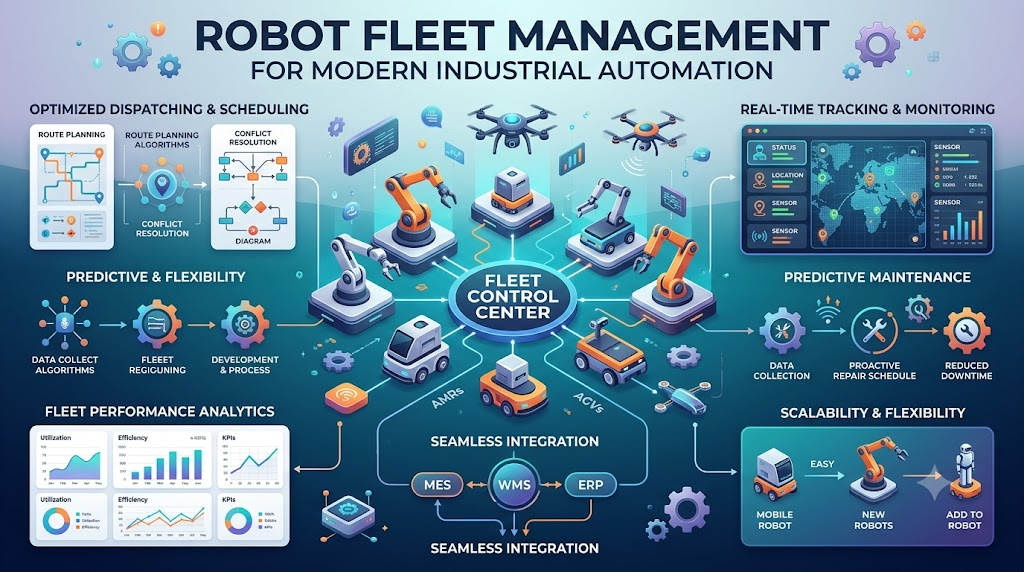
Robot fleet management is a system for managing many robots. It helps teams monitor robot health, location, tasks, and work status. Teams can use one system instead of checking each robot alone.
The system collects data from robots during daily work. It can show battery levels, task progress, and robot alerts. This gives teams a simple way to understand fleet activity.
For example, a warehouse may use 50 mobile robots. Workers can check all 50 robots from one dashboard. They can also see which robots need charging or support.
Why Is Robot Fleet Management Important?
Managing many robots can become hard without a central system. Each robot may have different tasks, battery levels, and work needs. A fleet system brings this information into one place.
Better visibility helps teams respond to issues faster. It also reduces the need for manual checks across the work area. This can save time and help teams keep work moving.
Imagine a warehouse where several robots have low batteries. The system can show their battery status clearly. Workers can then plan charging before those robots stop during important tasks.
How Does Robot Fleet Management Work?
Robot fleet management connects robots with a central control system. The system receives data from each robot and shows useful details. Teams can then watch robot activity from one place.
The system may track location, battery level, tasks, errors, and work speed. Some systems can also assign tasks to available robots. This helps teams use their fleet in a more organized way.
For example, a robot may finish one delivery task. The system can then give it another nearby task. This helps reduce waiting time and keeps robots active.
Key Features of Robot Fleet Management
A fleet management system can offer many useful features. Robot tracking is one common feature for large robot fleets. It helps teams know where each robot is working.
Task control is another important feature. Teams can assign, pause, or change robot tasks from one system. Alerts can also warn workers about faults or low battery levels.
Some systems also provide reports and work data. These reports can show robot use over time. Teams can use this data to find slow areas and improve daily operations.
Robot Monitoring and Tracking
Robot monitoring helps teams watch robot activity in real time. It can show where robots are and what they are doing. This makes it easier to spot unusual activity.
Tracking also helps teams find robots that need support. A robot may stop because of low battery or a system error. The team can see the issue and respond without checking every robot.
For example, a warehouse worker may see one robot stuck in an aisle. The system can show its location and error status. The worker can then inspect the robot and clear the problem.
Battery Management
Battery management is important for mobile robots. Robots need enough power to complete their assigned tasks. Poor battery planning can cause delays and reduce work output.
Fleet systems can show battery levels for many robots. They can also help teams plan when robots should charge. This allows workers to avoid unexpected stops during busy periods.
For example, five robots may reach low battery levels at once. The system can help the team plan charging times. This keeps enough robots available for ongoing work.
Task Assignment and Scheduling
Fleet management can help teams assign tasks to robots. The system can consider robot status, location, and available battery. This can make task planning easier.
Good scheduling can reduce unnecessary robot movement. Robots can receive tasks based on their current position. This may help them spend more time working and less time moving without purpose.
For example, a robot near a storage area may receive a nearby task. Another robot can handle a task in a different area. This simple approach can help balance robot work.
Benefits of Robot Fleet Management
Robot fleet management can improve visibility across daily operations. Teams can see robot activity without checking every machine manually. This makes large fleets easier to control.
It can also help reduce downtime and improve task planning. Early alerts can help teams respond to problems before they grow. Better data can also support future operation changes.
The main benefits may include:
- Better robot visibility
- Faster issue detection
- Easier task management
- Improved battery planning
- Better use of robot data
- Less manual monitoring
Challenges in Robot Fleet Management
Managing a robot fleet also brings some challenges. Robots may use different hardware or software systems. Connecting these systems can require careful planning and testing.
Network problems can also affect robot communication. A weak connection may delay updates or task messages. Teams need reliable systems to keep robot operations stable.
Training is another important part of fleet management. Workers must understand the dashboard and alert system. Clear training helps teams respond to robot issues with confidence.
Where Is Robot Fleet Management Used?
Robot fleet management is used in many modern work areas. Warehouses use it to manage mobile robots and delivery tasks. Factories may use it to support material movement.
Hospitals can also use robots for transport tasks. Robots may move supplies, meals, or other items between areas. A central system can help staff monitor these robot tasks.
Retail and logistics companies may also use robot fleets. Delivery robots can move goods between different locations. Fleet management helps teams track these robots and handle daily issues.
How to Choose a Robot Fleet Management System
Teams should first understand their robot needs. They should know how many robots they manage and what tasks they perform. This helps them choose features that match their daily work.
The system should also be easy for workers to use. A clear dashboard can make monitoring much simpler. Good alert tools can also help workers find important problems quickly.
Teams should also consider future growth. A system should support more robots as operations expand. This can prevent the need for major system changes later.
Future of Robot Fleet Management
Robot fleets are likely to become more common across many industries. As fleets grow, teams will need better ways to manage them. Central control systems can help support this growth.
Future systems may use more automation and smart data tools. These tools may help teams plan tasks and detect problems earlier. Better data can also help teams improve robot use.
For example, a system may study past robot activity. It could identify times when robots often wait or slow down. Teams could then use this information to improve their work process.
Conclusion
Robot fleet management helps teams manage many robots from one place. It provides useful information about robot status, tasks, location, and battery levels. This makes daily robot operations easier to monitor.
The right system can also help teams reduce manual work. It can support faster issue detection and better task planning. These benefits become more useful as robot fleets become larger.
For any team using many robots, central fleet control can simplify daily work. It gives workers better visibility and useful data. With good planning, teams can build more organized robot operations.
Leave a Reply